We left Bluefield mid-morning on December 26. Skies were dramatically overcast in a thousand vibrant shades of gray in the way that rainy Panama does so well. Leaving the harbor, we encountered a Ngöbe fisherman in a cayuco. He had several freshly caught lobsters and a couple of small fish that he clearly wanted to sell to us. We slowed down so he could come alongside. After a speedy transaction, I took the catch down below for cleaning. That was a bad idea.
Back to the Caribbean
The seas built as we headed into the open Caribbean for the first time since June. We had gotten spoiled in the archipelago where waters were well protected. Through the galley portlight I saw another brave fisherman paddling his cayuco in two meter swells. (Locals had told us that protected harbor waters were over fished; they have to go far out for a good catch.) I was starting to feel the effects of the swell combined with the smell of the fish in the galley. I rarely get seasick, but this time the queasiness set in quickly.
We sailed close to the coast, where eddies of wind and current gave us a fairly easy downwind sail. A large pod of dolphins accompanied us for hours.
Our relatively benign sail stopped abruptly when the wind died late in the afternoon. We headed offshore a bit in hopes of finding some wind. We got a little more wind than we wanted in and around numerous squalls. Waves heights were now two to three meters. The sea reminded us that we hadn’t stowed and battened down some things as well as we should have. We scrambled to keep everything in place.
After beating into the wind all night and all day the next day, we were getting tired. By midnight the second night we were approaching Colon, the main city on the Caribbean side of the canal. This meant we had to sail across the area where dozens of big ships wait at anchor or maneuver to take on a pilot for their canal transit. It’s scary sailing through such a concentration of big vessels at night—making sure we stay out of their way as they move around unpredictably. Modern navigation equipment makes collision avoidance a lot easier than it used to be, but staring at a screen too long in big seas carries its own risks, especially when tired. This time it was Joe’s turn to get queasy.
Portobelo
We arrived in Portobelo Sunday morning, salty and exhausted.
The small town is nestled in a picturesque harbor surrounded by hills and ruins of many seventeenth and eighteenth century fortresses. You really feel the history here, and quite a history it is.
Christopher Columbus discovered the harbor on his fourth voyage in 1504. For several centuries Portobelo was the most important port for shipping New World gold and silver back to Spain. Treasure attracted pirates. Francis Drake died of fever here in 1596. Henry Morgan looted Portobelo in 1668. A customs house, still standing, collected duties from ships delivering supplies from Europe.


Today Portobelo is a center of the Afro-Caribbean “Congo” culture along Panama’s central Caribbean coast. Congo is a mixture of music, costumes, and dance with African roots.


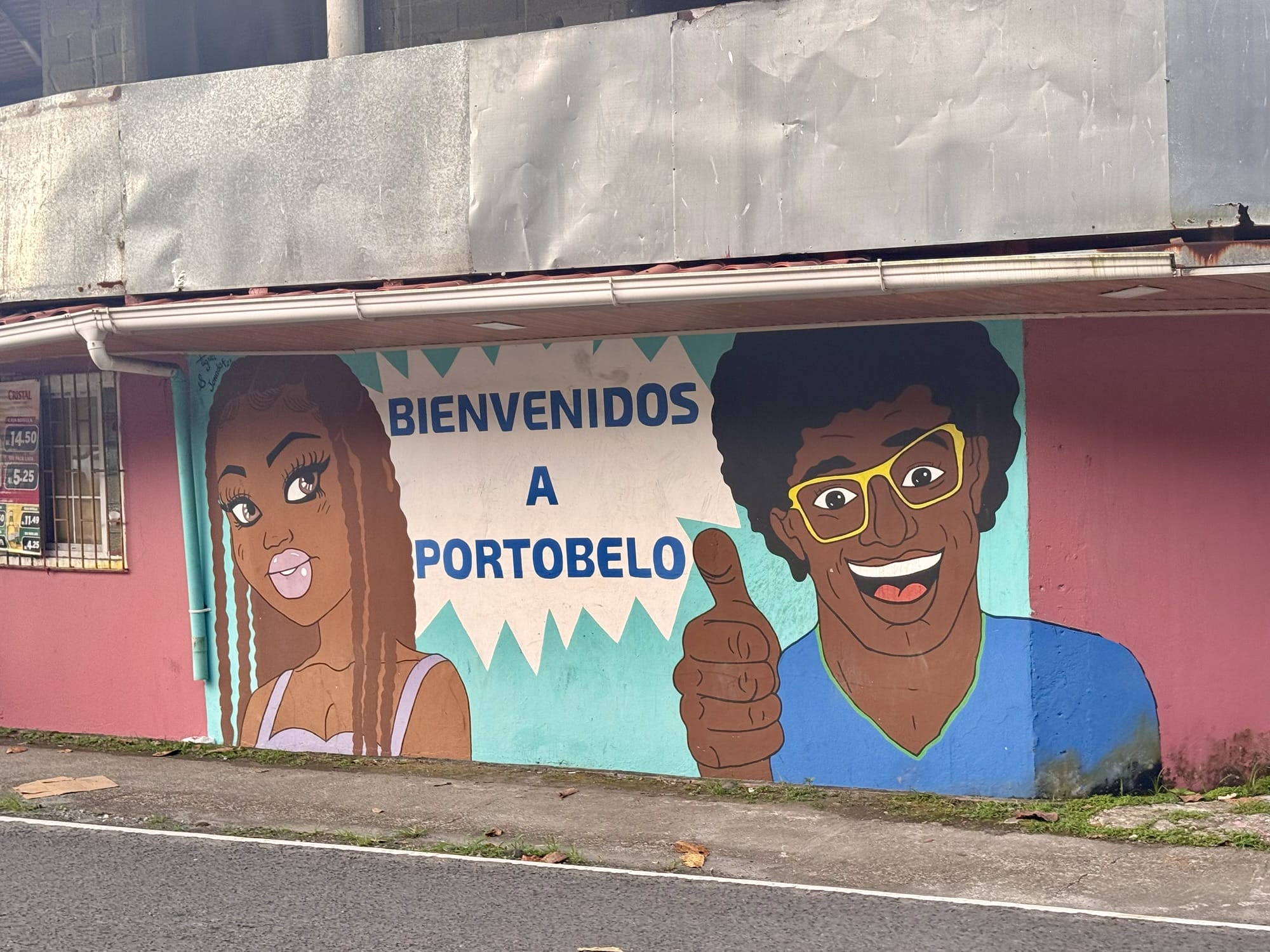
Portobelo is a simple, unfancy town. Centuries-old ruins are everywhere. Homes generally don’t appear wealthy but show a lot of creativity in design and decoration.


El Cristo Negro
In the Church of San Felipe, the Black Christ is revered by locals and attracts a large annual gathering of pilgrims. The origin of the Black Christ is unknown, but locals have plenty of legends about how the figure arrived mysteriously on their shore and miraculously put an end to a deadly cholera outbreak.


Red Devils
The Diablos Rojas (“Red Devil”) public transportation buses are a cultural icon of Panama. They are retired American school buses hotrodded with elaborate murals, chrome trim, lights, and music. They have largely been replaced by modern buses in the bigger cities, but here along the small coastal towns they remain in active use. There’s a lesson here: if you can’t afford luxury, you can at least use your creativity to make it fun.


Casa Vela
Portobelo’s history and culture are important and fascinating, but for us the highlight of our visit was meeting people. On arrival in the harbor we dropped anchor and immediately fell asleep. After several hours of napping we rowed over to a small restaurant on the water with a dinghy dock.
As strangers in a new town, we never know what to expect in these situations. This was one of those times when the cruising lifestyle really pays off—we put ourselves out there in the world, and the world greets us with the best that humanity has to offer.
Casa Vela is a cute, tiny waterfront restaurant. Francesco, the Italian owner, immediately greeted us as if we were old friends. And indeed we became fast friends with him and his Panamanian girlfriend Gabriella. Over the course of the next several days we met numerous other cruisers, tourists, and locals in the restaurant—all old or new members of the Casa Vela family. You never eat alone there, everyone at every table becomes a friend: a Cuban family on holiday from the city; a Canadian couple who have made Panama a second home; an American cruising couple headed to the Canal to continue their circumnavigation; a fourth-generation Panamanian-American woman speaking perfect American English—her great grandfather was a violinist who moved to Panama from New Jersey to play in a silent movie theater orchestra.

Francesco is a strong force in this tiny space. He’s quite the ham, always joking and telling stories. His Italian cooking is authentic and superb, including the best carbonara I’ve ever had. Don’t ask for pineapple on your pizza, Francesco will tell you to go to Hawaii. Don’t miss Gabriella’s carrot cake for dessert!
For New Year’s Eve Francesco and Gabriella invited us out to their friend’s large catamaran anchored in the harbor. There we watched fireworks and celebrated with a dozen people from six different counties. For so many different people from different backgrounds, a mutual love of the sea means there is always common ground and camaraderie.
We truly regretted leaving our new Casa Vela friends, but we’re grateful for the connections we made.


Leave a Reply